
November 27, 2025
4 min read
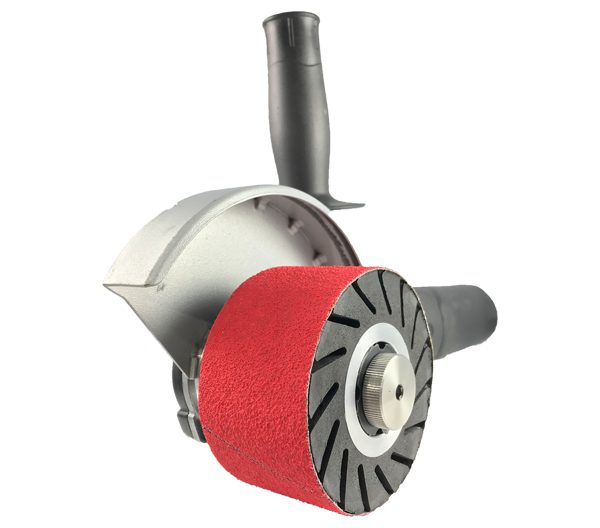
100mm wide satin polishing machine such as the Cibo Finimaster can actually be less efficient when trying to polish 50 or 25mm wide box section or stainless steel tube. Here is the latest solution from Cibo Abrasives. In this blog we will show you 4 different processes which work well with a variable speed grinder and a few accessories.
Process 1: Aggressive Grinding of Mill Scale to Remove Pitting & Create a Grain Finish
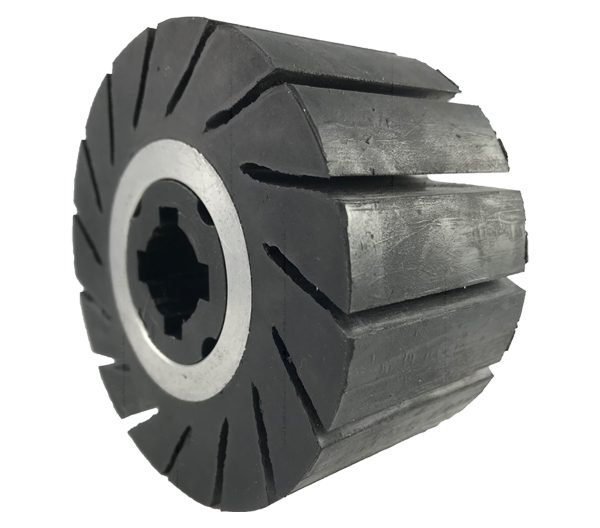
If you need to guarantee full removal of the mill scale pitting then rapid scale removal will be achieved with the use of our FX87 40 grit ceramic grinding sleeves on the hard rubber drum. A particularly good solution if you are removing the metal for weld prep.
Finer Satin Finishing & Graining
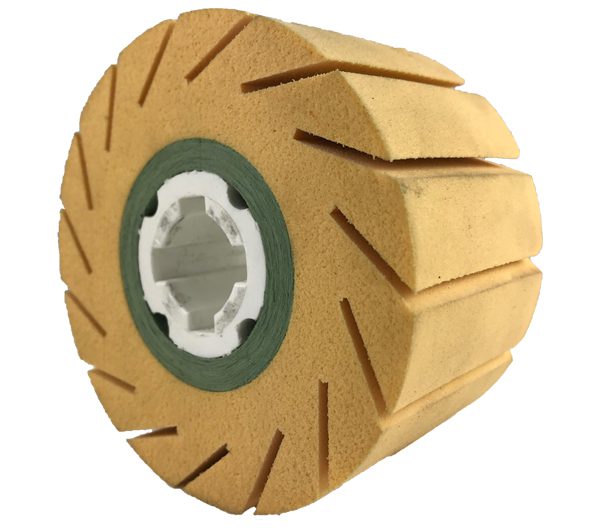
Going to a finer finish it is often better to remove the mill scale with a finer grit belt which will then be easier to blend to the final finish. In this scenario we would often recommend the FX87 P80 grit ceramic belts / sleeves which will still remove the pitting easily, but in a more controlled manner than the P40 grit ceramic grinding belts. In the video we wanted to show what happens when you switch to a softer contact wheel so our second stage process uses the softer wheel and the FF87 P120 grit ceramic sleeves. Using the softer wheel will reduce the risk of bouncing / chatter marks which will almost certainly happen with a harder contact wheel.
All abrasive belts will leave fine burrs on the surface so for the final 320 grit finish we recommend you blend the surface with our FMTM P280 grit tex / scotchbrite brush.
Process 3: Removal of Scratches & Surface Damage to Create a Good Satin Finish on Stainless Steel
Need to do a quick fix to a general satin finish? The Ginger Ninja is probably the perfect option. It has a 60 grit ceramic cloth which gives it the grinding power to bite into the mill scale and the tex fleece to soften and blend the final surface.
Assuming you have a P120 grit finish which can be achieved using Process 2 then with care and patience a consistent mirror polish finish is easily achievable with your variable speed grinder using the 3M Trizact 237AA sleeves on the softer FMRU/50/W contact wheel.
Use the 237AA sleeves in the following sequence to cut the surface to a super fine finish: A160 (P120 grit), A65 (P280 grit), A30 (P800 grit), A16 (P1400 grit) and A6 (P2000 grit).
A final finish can then be achieved by using our pink polishing soap (PV102) on the FLM/12550 polishing mop
Polishing tip: Always cross-cut the previous sanding marks when aiming for a mirror polish. This will allow you to make sure all previous sanding marks have been removed before you get to the final polishing stage.
Polishing tip: Make sure there is a lot of polish on the FLM polishing mop to get a good coverage of your metal.
Polishing tip: When you believe you are getting close to the final finish turn the speed of the grinder down and reduce the pressure to allow the mop to remove any final marks and polish. The lighter the pressure at the end, the brighter and cleaner the polished finish will be.
The New Grinder Accessories & What They Do: