
Zirconia or Ceramic Grinding Belts: You Choose

Early generations of ceramic grinding belts were tough but often didn’t break down very well. So if you have been working in metal fabrication for more than 10 years you will almost certainly have started by using blue zirconia grinding belts on your grinder. But is that still the best decision? Ceramic grinding belt technology has changed. The new generation of Cibo Ceramic grinding belts combine aggression with excellent performance characteristics for metal fabricators and manufacturers.

We now recommend Cibo ceramics for 80% of high aggression abrasive belt applications. Find out why below.

What is the Difference Between Zirconia and Ceramic Abrasives?

Ceramic abrasive grit has a micro-crystalline structure which creates a consistent fracture pattern in use. It is hard, tough and also sharp. The micro-crystalline structure means that it will breakdown consistently under even low to medium pressures creating multiple fresh cutting edges.

Zirconium oxide (zirconia) is similar in shape to ceramic grain, it is more durable than aluminium oxide. Zirconia breaks down under heavy grinding pressure. The lack of the micro-crystalline structure means that it will wear more quickly than ceramic abrasive grain.

There are two key characteristics that need to be taken into account when comparing abrasive grains. Hardness and Friability.

Hardness

Hardness of ceramic grinding belts compared to other abrasive grains

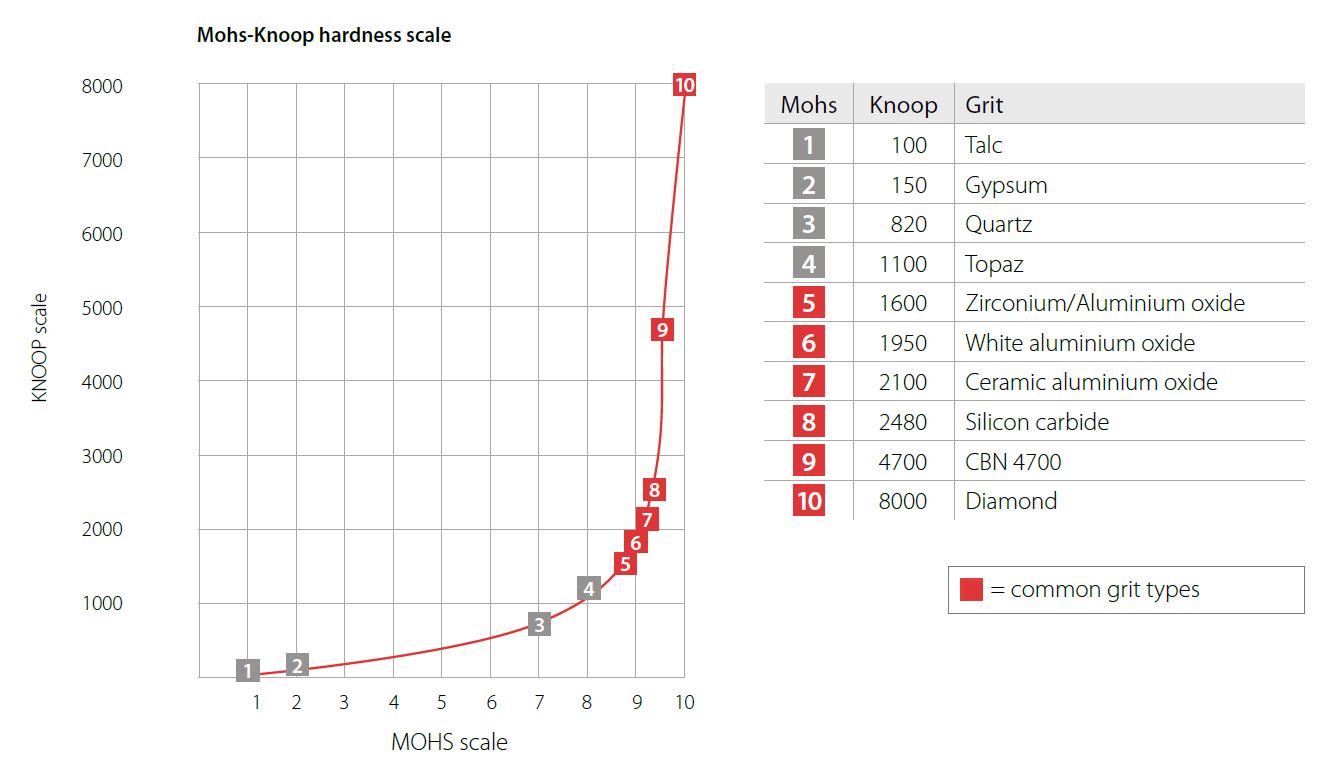
The hardness of abrasive grit is normally measured using either the Mohs or the Knoop hardness scale (similar test method to Vickers hardness scale). Mohs is a simple comparative scale whilst the Knoop scale uses a probe at a specific pressure to measure the depth of indentation in the abrasive grain.

  • Zirconia or zirconium oxide abrasive grain measures 5 on the Mohs scale and 1600 on the Knoop scale
  • Ceramic abrasive grain varies according to manufacturing process. As a general guide ceramic grain measures 7 on the Mohs scale and 2100 with Knoop.

Clearly the ceramic abrasives are harder. An increase in hardness from 1600 to 2100 will have a big performance of a ceramic grinding belt over a zirconia belt if the wear characteristics are correct.
Friability

friability of abrasives including ceramic grinding belts

Friability is the ability of the abrasive grain to fracture under pressure to reveal new cutting edges. Too fast and the grain wears down too quickly. Too hard and the grinding belt will just generate heat without removing metal.

Ceramic abrasives are also significantly less friable than zirconia abrasive grain.

Having a very hard and less friable abrasive grain is no use if the grain doesn’t break down when it needs to. This is why friability matters. There are still many ceramic grinding belts which use a hard grain but they just don’t break down unless subject to exceptionally high grinding pressures. And this is where the Cibo Ceramics are so successful. Our abrasive base material supplier spent many years working on the balance of cut v lifetime. Now the FX87 and FF87 generation of Cibo Ceramics abrasive grains combine the hardness with ideal friability characteristics.

Belt Grinding Aids

There is a third feature which makes a big difference to the grinding belts. The addition of belt grinding aids. Due to the shape of the abrasive grain ceramic abrasives can generate more heat than zirconia abrasives. To prevent this all the Cibo Ceramics grinding belts are manufactured with grinding aids impregnated into the surface of the belts. The grinding aids ensure a cooler cut on the workpiece. The added advantage means that the ceramic grinding belts not only out perform zirconia belts on steel and stainless steel but they now are the best option for grinding aluminium.

How Long Will Ceramic Grinding Belts Last?

Ceramic grinding belts are normally around double the cost of a good quality zirconia abrasive belt. So to justify the price they obviously need to last at least twice as long.

In simple terms. The coarser the grit, the greater the performance benefit we experience

3 or 4 Times the Belt Life

Both in terms of life but also in terms of speed of cut. Our customers tell us that, when they switch, the ceramic grinding belts are outlasting zirconia belts by 3 or 4 times, making them very cost effective. They also tell us that the speed of cut is often the greater benefit. The tougher grain combined with the grinding aids means that faster stock removal can be achieved at a lower grinding pressure.

Recommendations

  • For heavy stock removal on stainless steel or steel we recommend the FX87 36 grit ceramic grinding belts
  • Tube notching stainless tube prior to tig welding we recommend FX87 60 grit grinding belts
  • For rough grinding of steel the FX87 36 grit is the most popular belt
  • For aggressive grinding of aluminium our first choice would be FX87 60 grit ceramic grinding belts.
  • For sanding and shaping stainless steel we recommend the FX87 80 grit which will give good stock removal in a more controlled manner

Follow the links below to the different ranges of ceramic grinding belts:
EmailFacebookTwitterPinterest

We now recommend Cibo ceramics for 80% of high aggression abrasive belt applications. Find out why below.

What is the Difference Between Zirconia and Ceramic Abrasives?

Ceramic abrasive grit has a micro-crystalline structure which creates a consistent fracture pattern in use. It is hard, tough and also sharp. The micro-crystalline structure means that it will breakdown consistently under even low to medium pressures creating multiple fresh cutting edges.

Zirconium oxide (zirconia) is similar in shape to ceramic grain, it is more durable than aluminium oxide. Zirconia breaks down under heavy grinding pressure. The lack of the micro-crystalline structure means that it will wear more quickly than ceramic abrasive grain.

There are two key characteristics that need to be taken into account when comparing abrasive grains. Hardness and Friability.

Hardness

Hardness of ceramic grinding belts compared to other abrasive grains

The hardness of abrasive grit is normally measured using either the Mohs or the Knoop hardness scale (similar test method to Vickers hardness scale). Mohs is a simple comparative scale whilst the Knoop scale uses a probe at a specific pressure to measure the depth of indentation in the abrasive grain.

  • Zirconia or zirconium oxide abrasive grain measures 5 on the Mohs scale and 1600 on the Knoop scale
  • Ceramic abrasive grain varies according to manufacturing process. As a general guide ceramic grain measures 7 on the Mohs scale and 2100 with Knoop.

Clearly the ceramic abrasives are harder. An increase in hardness from 1600 to 2100 will have a big performance of a ceramic grinding belt over a zirconia belt if the wear characteristics are correct.

Friability

friability of abrasives including ceramic grinding belts

Friability is the ability of the abrasive grain to fracture under pressure to reveal new cutting edges. Too fast and the grain wears down too quickly. Too hard and the grinding belt will just generate heat without removing metal.

Ceramic abrasives are also significantly less friable than zirconia abrasive grain.

Having a very hard and less friable abrasive grain is no use if the grain doesn’t break down when it needs to. This is why friability matters. There are still many ceramic grinding belts which use a hard grain but they just don’t break down unless subject to exceptionally high grinding pressures. And this is where the Cibo Ceramics are so successful. Our abrasive base material supplier spent many years working on the balance of cut v lifetime. Now the FX87 and FF87 generation of Cibo Ceramics abrasive grains combine the hardness with ideal friability characteristics.

Belt Grinding Aids

There is a third feature which makes a big difference to the grinding belts. The addition of belt grinding aids. Due to the shape of the abrasive grain ceramic abrasives can generate more heat than zirconia abrasives. To prevent this all the Cibo Ceramics grinding belts are manufactured with grinding aids impregnated into the surface of the belts. The grinding aids ensure a cooler cut on the workpiece. The added advantage means that the ceramic grinding belts not only out perform zirconia belts on steel and stainless steel but they now are the best option for grinding aluminium.

How Long Will Ceramic Grinding Belts Last?

Ceramic grinding belts are normally around double the cost of a good quality zirconia abrasive belt. So to justify the price they obviously need to last at least twice as long.

In simple terms. The coarser the grit, the greater the performance benefit we experience

3 or 4 Times the Belt Life

Both in terms of life but also in terms of speed of cut. Our customers tell us that, when they switch, the ceramic grinding belts are outlasting zirconia belts by 3 or 4 times, making them very cost effective. They also tell us that the speed of cut is often the greater benefit. The tougher grain combined with the grinding aids means that faster stock removal can be achieved at a lower grinding pressure.

Recommendations

  • For heavy stock removal on stainless steel or steel we recommend the FX87 36 grit ceramic grinding belts
  • Tube notching stainless tube prior to tig welding we recommend FX87 60 grit grinding belts
  • For rough grinding of steel the FX87 36 grit is the most popular belt
  • For aggressive grinding of aluminium our first choice would be FX87 60 grit ceramic grinding belts.
  • For sanding and shaping stainless steel we recommend the FX87 80 grit which will give good stock removal in a more controlled manner

Follow the links below to the different ranges of ceramic grinding belts:

EmailFacebookTwitterPinterest